
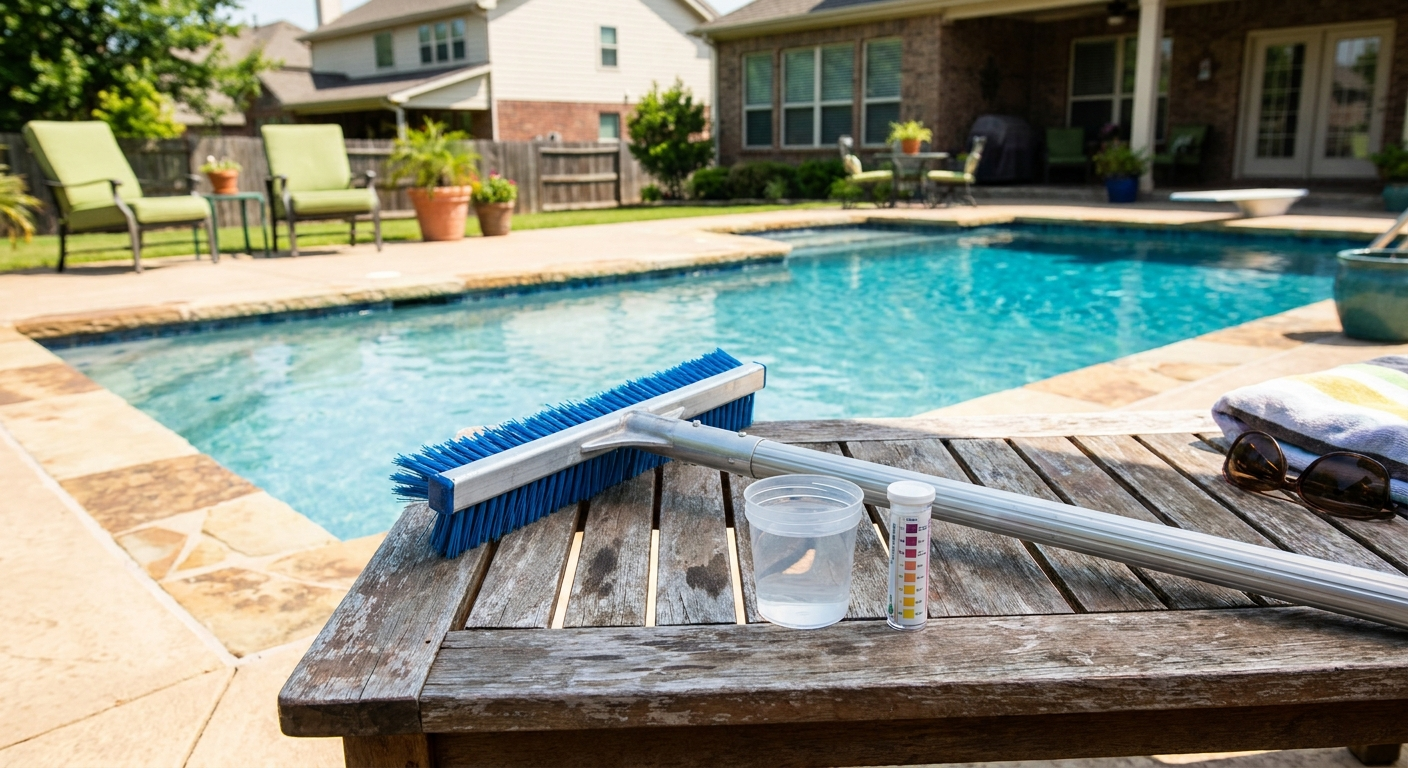
Solving Common Pool Water Problems With Better Chemistry Habits
Better testing habits help solve cloudy water, pH swings, algae, and other common pool problems.
Pool water problems often feel urgent. The water turns cloudy before a weekend. pH refuses to stay steady. Algae returns after cleaning. The pool smells strong even though you added sanitizer.
It is tempting to look for a quick fix. But many pool problems come from habits, not from a lack of effort.
When testing is irregular or adjustments are rushed, the water can become harder to control. Better chemistry habits make the pool more predictable.
This guide explains how to connect common pool problems with better daily and weekly care.
Cloudy Water
Cloudy water is one of the most common pool complaints. It can have several causes, so testing should come before treatment.
High pH can make water look dull. Low sanitizer can allow contaminants to build up. Poor filtration can leave fine particles in the water. Low or high alkalinity can also affect clarity.
Start by checking the filter and baskets. Then test pH, sanitizer, and alkalinity. This gives you a better picture before you add anything.
Cloudy water usually clears faster when the cause is handled directly.
pH That Keeps Moving
If pH changes soon after you adjust it, total alkalinity may be too low. Alkalinity helps pH resist sudden movement.
Rain, refill water, and heavy swimming can also affect pH. So can aeration from water features or returns pointed toward the surface.
Track pH and alkalinity together. If pH keeps moving in the same direction, there is likely a pattern.
For a deeper explanation of these connections, this comprehensive pool chemistry resource can help homeowners understand how each reading affects the others.
Algae That Comes Back
Algae is not only a chemical problem. It can also be a cleaning and circulation problem.
Low sanitizer gives algae a chance to grow. But poor brushing leaves hidden areas where algae can cling. Weak circulation may keep sanitizer from reaching corners, steps, and shaded spots.
If algae returns often, review pump run time, brushing habits, filter condition, and sanitizer level.
Treating visible algae is only part of the work. Preventing it from returning requires better routine care.
Strong Chlorine Smell
A strong chlorine smell does not always mean there is too much active sanitizer. It can mean the water has used sanitizer compounds that need attention.
This often happens after heavy swimming, sweat, body oils, and other contaminants enter the water.
Test the sanitizer and pH before deciding what to do. Also check water clarity and filtration.
Clean, balanced water should not have an overpowering smell.
Eye and Skin Irritation
Many swimmers blame sanitizer for irritation, but pH is often involved.
Low pH can make water feel sharp. High pH can also cause discomfort and reduce sanitizer performance.
Check pH first. Then review sanitizer and alkalinity. Balanced water is usually more comfortable for swimmers.
If irritation continues, look at the full routine, not only one reading.
Scale or Rough Surfaces
Scale can form when water balance is off for too long. High pH, high alkalinity, and high calcium hardness can all contribute.
Scale may appear on tile, ladders, steps, or equipment. It can also reduce system efficiency over time.
Prevention is easier than removal. Keep pH and alkalinity within range, and test calcium hardness as needed for your pool type.
Water That Looks Fine but Tests Poorly
Clear water can still be unbalanced. This is why visual checks are not enough.
A pool may look good while sanitizer is low or pH is drifting. The problem may only become visible later.
Regular testing helps catch hidden changes. It is better to correct a small issue early than to wait for cloudy water or algae.
Better Weekly Habits
- Test before adding chemicals.
- Brush areas that do not get strong circulation.
- Empty baskets before they restrict flow.
- Watch water level after rain or evaporation.
- Keep a simple record of repeated problems.
- Make one adjustment at a time.
These habits are simple, but they make pool care easier to repeat.
When to Slow Down
Rushing can make pool problems worse. Adding several treatments at once may create confusing results.
If the water is not dangerous or severely neglected, slow down. Test, adjust one level, circulate, and retest.
Pool water often responds better to steady correction than aggressive treatment.
Final Thoughts
Most pool water problems are easier to solve when you understand the cause. Cloudiness, pH swings, algae, odor, and irritation all point to different parts of the pool care system.
Better chemistry habits help you respond with more confidence.
Test regularly, clean consistently, and make measured adjustments. Over time, your pool becomes easier to manage and more enjoyable to use.
Related Article

We Are Righteous: The Rise of Purpose-Driven Streetwear

S8 and S8.COM: A Complete Guide to a Modern Digital Platform